Showing posts with label Digital Lifestyle. Show all posts
Showing posts with label Digital Lifestyle. Show all posts
Sunday, 11 October 2009
Home Automation Applications
Eliminating the need to concentrate on repetitive mundane household tasks leaves more time for a life of leisure; at least in theory. In practice, home automation helps to add a feeling of security at home, eliminates the need to think about making temperature adjustments, handles turning lights on and off and generally makes all those little details go away. In the cynic's eye, they only go away to be replaced by the bigger problem of having to reboot an entire house running on Windows, but that's an article for another time. Here we look at the basic features available in an automated home.

Softphone VoIP
While the VoIP services competing directly with traditional phone companies offer optional add-ons for connecting via a software phone, they tend to discourage this and often add additional fees for the convenience. A number of services offer software based phones available for calling PC-to-PC, PC-to-phone and PC-to-PDA. These services are similar to instant messaging clients in that you manage your list of contacts through a buddy list. Depending on which add-on features you opt for, the buddy list extends to anyone with a traditional phone number. A massive number of niche companies offer software VoIP solutions, with Gizmo and Skype being the two most likely standards.
Skype
Skype is currently the 800-pound gorilla in the softphone business. With compatible clients for Mac, PC and Pocket PC, access to broadband is the primary limiting factor in placing a Skype call. Computer-to-computer calls are free, with additional fees for placing calls to landline and cellular phones. Voicemail currently costs extra. A headset or microphone and speaker combination is required for communication, which makes this a little clunky for replacing the traditional phone, although several decent USB phones offer a reasonable alternative. A new beta service is working toward the concept of traditional telephone numbers linked to a Skype account. Network call quality varies greatly with latency issues worse than what's familiar to cell phone callers and echo that can be hard to troubleshoot. A massive user base makes this an interesting option for free international calling. Skype's biggest disadvantage is incompatibility with other software VoIP services.
Gizmo Project
Gizmo Project is setup on a user account configuration similar to Skype. Two key features differentiate Gizmo from Skype. Voicemail for Gizmo Project is free. A second cool feature is compatibility with any SIP-capable phone network. That second one is a little confusing, because there's no common list of SIP networks. Many of the smaller softphone projects are SIP compatible, like most of the users of an app called Firefly. A growing number of universities also support SIP to campus phone calling, which makes it possible to call the desk or room of someone on campus from your computer. Gizmo also supports traditional POTS hardware using a variety of compatible SIP phone units including the D-Link line of VoIP hardware. CallOut, the Gizmo feature to call traditional phone numbers costs 1.8 cents per minute in the US, with rates under 5 cents per minute in most other countries. CallIn provides a phone number tied to your Gizmo account for a monthly fee. Built in call recording makes this a potentially interesting tool for podcasting. A mapping feature shows you a rough geographic location for the person you are calling.
Lingo
Lingo offers a full complement of telco standard features, like call waiting, call forwarding and voicemail. Similar to Vonage, Lingo works with specific hardware designed for compatibility with the Lingo network. Currently, it's difficult to find Lingo compatible hardware in retail outlets, instead requiring you to wait for shipment from the company on service activation. Lingo is possibly the most comprehensive VoIP service for international calling, with unlimited calling to the U.S., Canada and most of Western Europe (as defined in their terms of service). In addition to the base phone number for $19.99 monthly, an International number in selected countries is available for $10 per month.
VoicePulse
VoicePulse is the most expensive of the VoIP telephone networks to setup, with a number of one time fees during the setup process for things like the hardware adapter and various initial setup options. Monthly pricing is comparable at $24.99 for the unlimited plan including free long distance, a traditional 10-digit phone number and access to common features. The added expense comes with additional flexibility, like the option to purchase a phone adapter capable of supporting traditional POTS service and VoIP if you're not ready to completely cut the telco cord. Voicemail is available via dialing an access code or email. For the uber-geek, VoicePulse offers an option to point the phone number(s) you lease from them at your own telephone routing server.
VoIP Telephone Services
VoIP telephone services are designed with a user experience similar to traditional POTS (plain old telephone service) phone networks. These services rely on custom network hardware or adapters for traditional phone hardware to supplant the phone network as call originator and terminator. For a monthly fee, VoIP phone services provide a phone number, unlimited long distance within the United States and most of the features typically offered by POTS services. Like traditional phone companies, VoIP services support 10-digit dialing, 7-digit dialing within your local area code and country code assisted dialing.
Vonage
Vonage is currently the most well known VoIP telephone company, with a massive marketing campaign in the U.S. and hardware integration with Linksys networking gear. The service is priced at $24.99 per month, including unlimited long distance in the United States and Canada. Service is available to Canada, Mexico, parts of the United Kingdom and the United States. A Web interface configures features like voicemail, caller ID, *69 and call forwarding. Voicemail is optionally routed to an email inbox, eliminating the need to dial in for messages. Hardware adapters for Vonage service are often available for $9.99 after rebate through CompUSA and Best Buy, making it affordable to integrate with existing phone hardware in your house. Because phone service is connected through this hardware, it can go on the road with you allowing your home phone to ring from anywhere you have access to broadband. One negative to Vonage is an additional charge for using their software phone interface.
Voice over IP
Voice over IP (VoIP) is person-to-person voice communication over broadband Internet connections. VoIP is available in a variety of formats, including software interfaces requiring a microphone and speakers connected to a PC or Mac, proprietary hardware solutions, and hardware capable of adapting traditional phone equipment to a VoIP network.
High-Speed Internet Options
Broadband penetration in the U.S. is widely reported as being more than 50% of all users. Connections come in several flavors, depending on which type of provider you use. The pay television services for satellite and cable offer high-speed access. Telephone companies offer several levels of DSL connection options. Cellular companies now open their networks to data connection options. Or you can bypass all the traditional carriers and sign up for WiFi services in many locations. Deciding which option is right for your needs is a combination of picking from services available in your area, as well as determining your basic connection needs
Online Video Subscription Services
Two years ago, I went a full year without cable, instead relying on legal Internet services to provide me the video I craved. It wasn't easy and at the time, and it certainly wasn't better than cable. If some of the services available today were available then, I might never have re-subscribed. The world of subscription video choices is still somewhat lacking, but we're starting to see a viable set of alternatives to the traditional video distribution model of set top box and coaxial cable (of course, you still need that cable for the Internet pipe).
Notebook Computer Audio
For people who travel and people who want a computer they can easily move around the house, a laptop is often the ideal solution from a convenience and productivity standpoint. Cramming all the PC features into a small package results in a series of tradeoffs because there simply isn't room to have all of the great features we've come to expect from a desktop computer. Even the so-called desktop replacements, with large widescreen displays, Hyper-Threaded P4 processors, and large hard drives are compromising in areas where the user experience for multimedia tends to suffer. The most obvious corner-cutting savings is the audio experience. The speakers are never powerful enough to accurately recreate sound and the sound cards tend to be barebones solutions with a headphone jack, line in, and microphone at best. There are several ways to make your audio experience better and still maintain portable convenience.
Virtual Dressing Room
Eyemagnet has developed a Virtual Dressing Room for the Hallensteins menswear chain which is transformed to a single panel that reflects the user. The users can just use simple arm and hand gestures to ‘try on’ any dresses for a trial in the store, they can take a snap of any selected outfit and have it sent to their mobile phone. Watch here the Virtual Dressing Room Presentation and core concept of this digital technology.
Thursday, 1 October 2009

Following yesterday’s news that mobile carrier Orange are to begin selling the iPhone here in the UK, Vodafone have announced that they too are jumping on the Cupertino bandwagon, albeit not till early 2010.
And with O2’s two-plus year monopoly on Apple’s iconic device therefore well and truly broken, overpaid analysts and most of the tech press/blogosphere have been quick to predict a pending price war for the iPhone and associated tariffs this side of the pond. However, I’m still not convinced that this will be the case.
As I’ve already argued, the carriers need the iPhone more than Apple needs them, resulting in a classic case of divide and conquer. Orange and Vodafone could afford no more to sit by and watch their high end customers flock to O2 in order to get their hands on the so-called Jesus phone. Vodafone CEO Vittorio Colao has admitted as much, telling investors that not having the iPhone has hindered the ability for the carrier to remain competitive in the UK.
So instead of one carrier signing a pact with the devil, we now have three.
Remember Apple has already achieved what Nokia, the world’s largest handset maker, has been trying to do for years: completely own the customer relationship (think marketing, post-sale services and billing). Only, as The Register reports, Apple also appears to own the carrier relationship too.
Our understanding is that Apple not only reserves the right to get involved in pricing of handsets, but also expects “partner” operators to contribute generously to Apple-controlled advertising. This is on top of the ongoing revenue share to which operators around the world have signed up. Operators used to demand exclusivity before agreeing to such things, but such is the lure of the iPhone, that Apple can call the tune without having to offer the additional inducement of an exclusive deal.
Apple already offers the iPhone through multiple carriers in many countries, but the company is very careful to maintain control of the platform, regardless of the network from which their customers get their iPhones. Apple considers iPhone users to be Apple customers – network operators are just dumb pipes to Cupertino.
The end result of Apple ‘owning’ both customer and carrier relationships, says The Register, will be “near-identical offerings, differing only in the colours of the attached [carrier] logos”.
In other words, don’t expect an iPhone price war anytime soon.
Wednesday, 30 September 2009
Over Half Of All Spam For Pills And Viagra Read more
Nigerian 419 scammers fall far behind blue pill shifters for the trouser-dept failed.
When it comes to spam, the most popular topic is pharmaceutical, with 30.6 per cent of spams trying to flog you sexual drugs with 20.9 per cent imploring you to invest in some other medicines.
The figures come from Microsoft’s latest Security Intelligence Report, which found that over half of all spam is pharmaceutical related, with offers for drugs like Viagra hoping to tempt the erection-challenged.
Although they’ve become notable for the ever increasing rewards on offer (”let me transfer $320 million into your account and you can take 25%), the infamous 419 scams make up just 1.1 per cent of the total, with phishing scams taking up 2.5% of all spam and fake diplomas 1.9%.
Over Half Of All Spam For Pills And Viagra
Microsoft believes that the latest figures show something of a score draw between spammers and email services trying to block them:
“Overall, the amount of spam that successfully evades the blocking and filtering techniques used by services like Windows Live Hotmail and EHS to land in users’ inboxes has decreased dramatically from its peak a few years ago, though the trend has been much flatter over the last year or two, indicating a state of rough equilibrium between spammers and e-mail services.
“This should not be taken as a sign that the pace of advancement and adaptation has slowed on either side, but rather that both spammers and spam fighters continue to adapt to new techniques deployed by their opponents, creating a complicated sort of stalemate in which neither side has managed to gain the upper hand.”
Perhaps keen to fit in a cheap Carry On joke into the proceedings, Microsoft have produce a ‘ring of spam’ showing how the spam is distributed.
Read more: http://digital-lifestyles.info/2008/11/03/over-half-of-all-spam-for-pills-and-viagra/#ixzz0Sdxb1rLi
When it comes to spam, the most popular topic is pharmaceutical, with 30.6 per cent of spams trying to flog you sexual drugs with 20.9 per cent imploring you to invest in some other medicines.
The figures come from Microsoft’s latest Security Intelligence Report, which found that over half of all spam is pharmaceutical related, with offers for drugs like Viagra hoping to tempt the erection-challenged.
Although they’ve become notable for the ever increasing rewards on offer (”let me transfer $320 million into your account and you can take 25%), the infamous 419 scams make up just 1.1 per cent of the total, with phishing scams taking up 2.5% of all spam and fake diplomas 1.9%.
Over Half Of All Spam For Pills And Viagra
Microsoft believes that the latest figures show something of a score draw between spammers and email services trying to block them:
“Overall, the amount of spam that successfully evades the blocking and filtering techniques used by services like Windows Live Hotmail and EHS to land in users’ inboxes has decreased dramatically from its peak a few years ago, though the trend has been much flatter over the last year or two, indicating a state of rough equilibrium between spammers and e-mail services.
“This should not be taken as a sign that the pace of advancement and adaptation has slowed on either side, but rather that both spammers and spam fighters continue to adapt to new techniques deployed by their opponents, creating a complicated sort of stalemate in which neither side has managed to gain the upper hand.”
Perhaps keen to fit in a cheap Carry On joke into the proceedings, Microsoft have produce a ‘ring of spam’ showing how the spam is distributed.
Read more: http://digital-lifestyles.info/2008/11/03/over-half-of-all-spam-for-pills-and-viagra/#ixzz0Sdxb1rLi
Google’s Gmail Now Freaking Out: Mis-marking Mail As Spam Read more: http://digital-lifestyles.info/2009/01/31/googles-gmail-now-freaking-out-mis-mar
As soon as Google fixed their misreporting “This Site May Harm Your Computer” search problem, we had reports of another problem with a Google service. This time GMail.
Gmail appears to be putting legitimate emails in the Spam folder and also showing the following warning message above many emails …
Warning: This message may not be from whom it claims to be. Beware of following any links in it or of providing the sender with any personal information.
The message has a right red background, so you’re not likely to miss it.
Best check your Gmail spam account for Non-spam mail.
Damage to Google?
There have been a number of comments on the previous story asking if this will damage peoples view of Google.
Given their generally unshakable reliability, it’s hard to imagine that these two incidents won’t have some detrimental effect on people’s confidence in Google.
Read more: http://digital-lifestyles.info/2009/01/31/googles-gmail-now-freaking-out-mis-marking-mail-as-spam/#ixzz0SdvE2rjO
Gmail appears to be putting legitimate emails in the Spam folder and also showing the following warning message above many emails …
Warning: This message may not be from whom it claims to be. Beware of following any links in it or of providing the sender with any personal information.
The message has a right red background, so you’re not likely to miss it.
Best check your Gmail spam account for Non-spam mail.
Damage to Google?
There have been a number of comments on the previous story asking if this will damage peoples view of Google.
Given their generally unshakable reliability, it’s hard to imagine that these two incidents won’t have some detrimental effect on people’s confidence in Google.
Read more: http://digital-lifestyles.info/2009/01/31/googles-gmail-now-freaking-out-mis-marking-mail-as-spam/#ixzz0SdvE2rjO
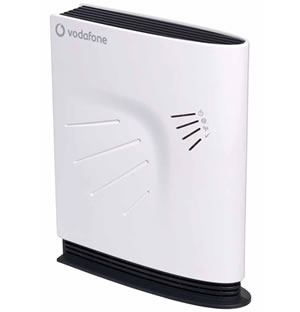
18 months ago, Digital-Lifestyles was one of the first, if not _the_ first, consumer-focused publications to report on Femtocells.
We were wowed by the concept – very strong cellular reception in your home, with the calls and data heading up your broadband connection.
As we said back in Nov 2007 …
Quite why this wouldn’t become common places is a hard one to understand. We can see no losers with this – the individual is getting full strength reception on their mobile phone; extending battery life; data services will be at full rate; the cellular operator is saving money on backhaul; the mobile subscriber is likely to get a considerable number of home-based calls bundled in for free.
Read more: http://digital-lifestyles.info/2009/06/24/vodafone-access-gateway-femtocell-1-july-uk-launch/#more-5841#ixzz0SdupXLQe

#geomob Event Review: Highly Recommended: On TomorrowWith the next #geomob event coming along tomorrow (30th June, deets below), we thought you’d like to know what it’s like and why you’d be doing yourself a favour for going along.
#geomob is a fresh London social meetup that, you won’t be surprised to hear, centres on services that use geo-locating data and those apps that run on mobile devices.
It’s run by Christopher Osborne an all over good guy and geo man around town.
Friendly
We popped over to its second meeting and were rather impressed.
The top floor of wallacespace in London, where it was then held, is a great venue – relaxed, well equipped with a staffed kitchen that served hot snacks and a fridge full of beer (thanks to Yahoo’s Geo group for funding it).
The assortment of relaxed seating quickly filled to a group of double the size of #geomob’s first meeting, made up of friendly tech bods.
Interesting speakers
There were four presenters are the event we went to, but they change each session.
Google’s Russell Middleton ran through the recent changes to their geo/map offerings, including auto location detection, working on static and mobile device.
The most potentially useful advance was Google’s static maps. They’re near instantly displayed as they’re flat JPGs, as opposed to the previous standard of needing to load map tiles and Javascipt.
Andrew Scott overviewed Rummble, a mobile recommendation service.
Alfie Dennon’s talk was a smorgasbord of projects built around the idea of constructive change through technology.
An example being StoppedClocks enabling member of the public to report when and where they see stopped clocks around the UK.
Once they are identified, a deal was done with a clock repairing company to carry out the repair work at cost.
The goodness doesn’t stop there. A college, that runs a clock repair course, has its students go out and practice their studies fixing the clocks – everyone gains.
One of the additional great things about this project is its achievement in encouraging / extracting input from people – people who would normally be really unlikely to enter information into a Web service.
Once these people have had their popped their online cherries, the likelihood is that they’ll be far more willing to contribute.
_FluidDB
The last presenter, Terry Jones *covered* the radically open and flexible FluidDB.
In essence, it’s a database that doesn’t have a rigid structure, because life and the information that comes at you during it aren’t structured.
When data is stored, those with a knowledge of databases will be surprised to hear that Objects don’t have owners. Objects have Attributes. Attributes have Owners.
We were pretty surprised that the assemblage of geeks weren’t all already aware of Terry’s FluidDB.
Given the exciting nature of the database, and I suspect, the sheer energy of Terry’s approach, he was ‘allowed’ to carry on beyond the normal 10 minutes presenters are allotted.
_Is #Geomob good?
Not only is the area of geo-location finally coming in to bloom, but event-founder Christopher Osborne and his compatriots have fashioned #geomob into a great, relaxed environment to swap geo and tech talk and experiences at.
Get your skates on though – there’s not many tickets left.
Read more: http://digital-lifestyles.info/2009/06/29/geomob-event-review-highly-recommended-on-tomorrow/#more-5843#ixzz0SdtYGvTB
Subscribe to:
Posts (Atom)